Adobe After Effects
| Original author(s) | Company of Science and Art |
|---|---|
| Developer(s) |
|
| Initial release | January 1993; 26 years ago |
| Stable release | CC 2019 (16.0.1.48) / December 10, 2018; 5 months ago |
| Written in | C++[citation needed] |
| Operating system | Windows 10 (x64 only) v1703 and later, macOS 10.12 Sierra or later |
| Type | Visual effects, Motion graphics, Compositing, Computer animation |
| License | Trialware, software as a service (SaaS) |
| Website | www.adobe.com/products/aftereffects |
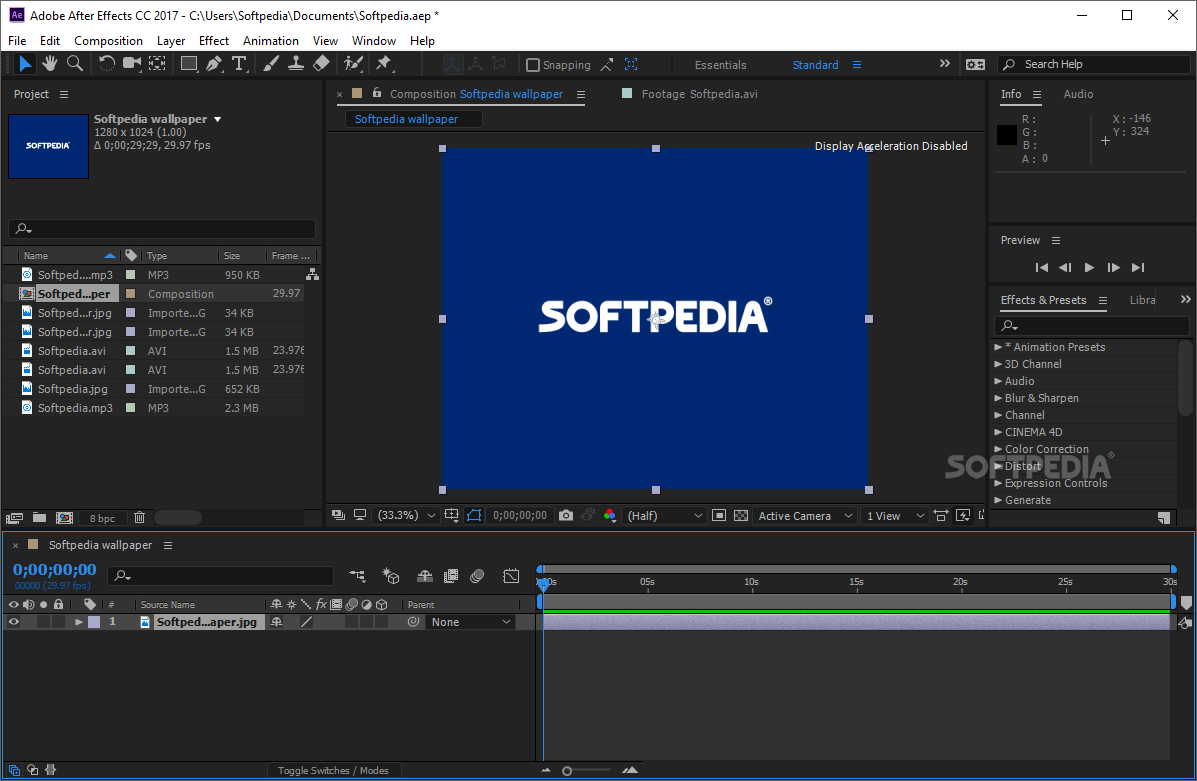
Adobe After Effects CC 2018 features a powerful tool set, allowing you to create motion graphics and visual effects for film, video, and multimedia. Adobe After Effects CC 2018 Overview. Developed by Adobe Systems, After Effects is a program for motion graphics, visual effects, and compositing.
Adobe After Effects is a digital visual effects, motion graphics, and compositingapplication developed by Adobe Systems and used in the post-production process of film making and television production. Among other things, After Effects can be used for keying, tracking, compositing, and animation. It also functions as a very basic non-linear editor, audio editor, and media transcoder. In 2019, the program won an Academy Award for scientific and technical achievement.[1]
History[edit]
After Effects was originally created by David Herbstman, David Simons, Daniel Wilk, David M. Cotter, and Russell Belfer[2] at the Company of Science and Art in Providence, Rhode Island, where the first two versions of the software, 1.0 (January 1993)[3] and 1.1, were released by the company. CoSA along with After Effects was then acquired by Aldus corporation in July 1993, which was in turn acquired by Adobe in 1994, and with it PageMaker. Adobe's first new release of After Effects was version 3.0.
The following is the list of versions of After Effects over the years, including the first two versions released by CoSA.
| Developer | Date | Icon | Version | Codename | Major features added | ||||||||||
|---|---|---|---|---|---|---|---|---|---|---|---|---|---|---|---|
| CoSA | January 1993 | 1.0 | Egg | Layered compositing with mask, effect, transforms, keyframes; Mac only | |||||||||||
| May 1993 | 1.1 | More effects | |||||||||||||
| Aldus | January 1994 | 2.0 | Teriyaki | Time Layout window, image sequence support, motion blur, multi-machine rendering, frame blending, proxies | |||||||||||
| May 1994 | 2.0.1 | Power Macintosh version (PPC)[4] | |||||||||||||
| Adobe | October 1995 | 3.0 | Nimchow | Render queue, bezier masking, time remapping, keyframe assistants (wiggler, motion sketch, smoother), multiple effects per layer, advanced keying, velocity graph, 1/2/4 point motion tracking, motion math, first Japanese version, layer transfer modes, continuously rasterize Illustrator files, Photoshop as comp import with layer/transfer mode/alpha channel support, 3:2 pulldown, non-square pixel support | |||||||||||
| April 1996 | 3.1 | File formats, multiprocessing; last Mac 680x0 version | |||||||||||||
| May 1997 | 3.1 (Windows 95/NT) | Dancing Monkey | First Windows version, contextual menus, first French and German versions; in November 1997, Path Text effect and Animated GIF output were released for free to registered users of 3.1[5] | ||||||||||||
| January 1999 | 4.0 | ebeer | Tabbed windows, movable time layout columns, multiple masks per layer, warping effects, particle playground, audio effects, transform effect, adjustment layers, align palette, rulers and guides, RAM preview, glows/blurs no longer clip at layer edge, Premiere import, Illustrator layers support, label colors in timeline; first simultaneous Mac and Windows release | ||||||||||||
| September 1999 | 4.1 | Batnip | Flowchart view, watch folder, 3D channel effects, collect files command, auto deinterlacing, sequence layers, save favorite effects (.ffx), separate text fill/stroke, 30,000×30,000 image support | ||||||||||||
| April 2001[6] | 5.0 | Melmet | 3D layers, 3D lights, dynamic previews, parenting, vector paint, expressions, pick whip, draw/edit masks in comp window, integration of Atomic Power plug-ins (foam, wave world, card dance, shatter, vegas), 16 bits per channel color, Illustrator transparency support, SWF export, mask colors, mask motion blur, mask expansion, RAM Preview region of interest, Photoshop 6 vector mask import, PDF import, solo switch, scrubbable property values, custom workspaces, effect reordering, PAR correction, reveal file on disk, reduce project, trim comp to work area, >2GB movie output | ||||||||||||
| January 7, 2002[7] | 5.5 | Fauxfu | Advanced 3D renderer, multiple 3D views, import camera data, colored shadows, projection layers, effects palette, post render actions, advanced lightning, adjustment layer lights, smart mask, looping via expressions, RealMedia output, expression controllers, Zaxwerks 3D Invigorator Classic bundled; first OS X version | ||||||||||||
| August 2003 | 6.0 | Foodfite | Paint, scripting, text layers and animators, editable Photoshop text layers, OpenGL support, new motion tracker, Rotobezier, Keylight, Liquify, Scribble, Dust & Scratches, background rendering of RAM Previews | ||||||||||||
| June 16, 2004 | 6.5 | Chambant | Advanced clone tool, presets gallery, grain management, integration of Cycore Effects plug-ins, Color Finesse bundling, disk caching, Firewire video output, interface light/dark controls, motion track with scale, Grain Surgery bundling, AAF and OMF support[8] | ||||||||||||
| January 2006 | 7.0 | Clamchop | New unified window UI, timewarp, graph editor, OpenGL 2.0 support, 32 bpc HDR color, 32-bit audio, Adobe Bridge support, display color management, dynamic link with Premiere Pro, script editor, auto save, Photoshop file creation, smart blur, lens blur, per-character text blurring, first Spanish and Italian versions | ||||||||||||
| July 2, 2007 | CS3 (8.0) | Metaloaf | Shape layers, puppet tool, brainstorm, clip notes, Photoshop vanishing point import, adaptive motion blur, per character 3D text animation, real-time audio playback, simultaneous multi-frame rendering, SWF vector import, 32-bit linear blending, full color management; first Universal Binary Intel Mac version | ||||||||||||
| February 22, 2008 | CS3 (8.0.2) | Loafdot | Panasonic P2 support; last Mac PowerPC version | ||||||||||||
| September 23, 2008 | CS4 (9.0) | Chinchillada | QuickSearch in the project and timeline, mini-flowchart, breadcrumbs, live PSD 3D layer import, separate XYZ, Imagineer Mocha bundled, cartoon effect, XFL export, XML export, XMP metadata, | ||||||||||||
| December 10, 2008 | CS4 (9.0.1) | Chinchidotta | RED R3D file support (via REDCODE v1.3 plugin) | ||||||||||||
| May 29, 2009 | CS4 (9.0.2) | Lottadotta | Clip-level RED R3D support (via REDCODE v1.7 plugin), XDCAM HD (Avid-style MXF) support | ||||||||||||
| October 6, 2010[9] | CS4 (9.0.3) | Yaddadotta | Fixes 'locking existing frames' message delay at start of RAM preview, decreased performance due to Wacom driver conflict, aerender not shutting down background processes, and miscellaneous crashes especially on Mac OS X 10.5 during drag-and-drop operations | ||||||||||||
| April 30, 2010[10] | CS5 (10.0) | Esgocart | 64-bit native (mandatory) on OS X and Windows, Roto Brush tool, Refine Matte effect, mocha v2, LUT support, AVC-Intra import and improved RED (R3D) support, Align panel improvements, Synthetic Aperture Color Finesse 3, Digieffects FreeForm, auto-keyframe mode,[11] animated GIF export functionality removed. | ||||||||||||
| September 3, 2010[12] | CS5 (10.0.1) | Esgodot | RED updates (color science v2, ROCKET, RMD metadata), improved LUT compatibility (.3dl with floating-point values or 3DMESH/Mesh keywords, or saved from ASSIMILATE SCRATCH systems), updates to bundled third-party plug-ins | ||||||||||||
| April 8, 2011[13] | CS5 (10.0.2) | Esgodoh | Fixes an 'Unexpected data type' error opening project with missing effects, a crash with Directional Blur and other effects on computers with 16 or more logical processors, and a crash opening a composition created by Automatic Duck Pro Import AE. | ||||||||||||
| April 11, 2011[14] | CS5.5 (10.5) | Codname | Warp Stabilizer effect, Camera Lens Blur and camera layer improvements for depth-of-field and bokeh, source timecode support and Timecode effect enhancements, stereoscopic 3D rig creation and improved 3D Glasses effect, light falloff, CinemaDNG import, expanded RED (R3D) features, XDCAM EX and XDCAM HD output, integration with Adobe Audition CS5.5, save project as CS5. | ||||||||||||
| June 30, 2011[15] | CS5.5 (10.5.1) | Codot | Fixes for delay when typing in a text layer if mouse pointer was above the Composition panel, and inability to use an upgrade serial number. | ||||||||||||
| April 23, 2012[16] | CS6 (11.0) | SpinalTapas | Global Performance Cache, 3D Camera Tracker, ray-traced and extruded text and shapes, variable-width mask feather, Automatic Duck Pro Import for importing projects from other applications, including Final Cut Pro and Avid software, new and improved GPU acceleration features, Rolling Shutter Repair effect, Mocha for After Effects CS6, new and updated effects. Live PSD 3D layer import was removed. | ||||||||||||
| May 25, 2012[17] | CS6 (11.0.1) | BigDottom | Support for Nvidia GeForce GTX 680, AtomKraft. | ||||||||||||
| October 12, 2012[18] | CS6 (11.0.2) | NoneMoreDot | Support for more Nvidia cards and Intel HD Graphics, new memory handling preference allowing reversion to CS5.5 behavior. | ||||||||||||
| June 17, 2013[19] | CC (12.0) | Sconehenge | Maxon Cinema 4D Lite and Cineware integration, Refine Edge tool, Refine Soft Matte, layer snapping, Warp Stabilizer VFX | ||||||||||||
| October 31, 2013[20] | CC (12.1) | Plabt Blue Ribbon | OS 10.9 and Retina support, mask tracker, Detail-preserving Upscale effect, property linking, improved snapping | ||||||||||||
| December 13, 2013[21] | CC (12.2) | Pinot Butter | Automatic creation of folders for image sequences, command to convert parametric shape layer paths to Bézier paths, more snapping improvements, lots of small 'polish' improvements | ||||||||||||
| June 18, 2014[22] | CC 2014 (13.0) | Goatmeal Stout[23] | Key Cleaner effect and Advanced Spill Suppressor effect, After effect text templates created in After Effects editable in Premiere Pro, compositing options for each effect including ability to confine the area affected by each effect with masks, import of Sony RAW footage (raw files from F5, F55, and F65 cameras), import of MPEG-4 SStP (Simple Studio Profile) Sony SR MXF files, video preview on external monitor using Mercury Transmit | ||||||||||||
| Sept 7, 2014[24] | CC 2014.1 (13.1) | Hefe Marathon | High-DPI content and UI (Mac OS, Windows), refreshed 'blue' UI, Copy With Relative Property Links command, color management for Dynamic Link, Maxon CINEMA 4D Lite R16 and CINEWARE 2.0, Collect Files for CINEMA 4D assets, native GoPro CineForm codecs, scripting improvements for text layers | ||||||||||||
| Dec 16, 2014[25] | CC 2014.2 (13.2) | Finish Lime | More scripting improvements for text layers, expression access to dynamic layer bounds, new keyframe icons. | ||||||||||||
| June 15, 2015[26] | CC 2015.0 (13.5.0.347) | Mussel Car | Uninterrupted playback, new Adobe Character Animator (Preview 1), support for Creative Cloud libraries, face tracker, Maxon CINEWARE v2.0.16, smooth experience and interaction for the user even when rendering is in progress. | ||||||||||||
| November 30, 2015[27] | CC 2015.1 (13.6.0) | Currant Time | Character Animator (Preview 3), refinement of playback performance and interaction, multi-touch gestures, stacked panel groups, new Lumetri Color effect, additional ICC profiles, two new Cycore FX plugins.[28] | ||||||||||||
| January 27, 2016[29] | CC 2015.2 (13.7.0) | Fibonachos | Maxon CINEWARE v3.0 (R17) (including support for the Take system, OpenGL renderer, and syncing timelines between After Effects and Cinema 4D), option to auto-save when starting Render Queue, improvements to Cache Before Playback previews. | ||||||||||||
| June 21, 2016[30] | CC 2015.3 (13.8.0) | Abbacore | New playback architecture, Maxon Cineware 3.1, export 3D text and shape layers to Maxon CINEMA 4D, GPU accelerated effects (Lumetri Color, Gaussian Blur, and Sharpen), improved caching and playback of image sequences, send compositions from Render Queue to Media Encoder, Character Animator (Preview 4) | ||||||||||||
| November 2, 2016[31] | CC 2017 (14.0) | Codfather | CINEMA 4D rendering engine for 3D compositions, Creative Cloud Team Projects (Beta), Real-time playback of unaltered source media, more GPU accelerated effects, Live Text Template improvements, Date & Time Tokens, Also includes: Better UI retina support, improved markers, scripting enhancements, Adobe Media Encoder export improvements. | ||||||||||||
| January 18, 2017[32] | CC 2017.1 (14.1) | The Codfather Part Tuna | Ability to save Team Projects as local projects. | ||||||||||||
| April 19, 2017[33] | CC 2017.2 (14.2) | Plabtjacks | Lumetri Scopes, Effect Input Layer Options, Camera-shake deblur, multiple GPU optimizations. | ||||||||||||
| June 13, 2017[34] | CC 2017.2 (14.2.1) | Blueberry Plabtjacks | Performance improvements and bug fixes. | ||||||||||||
| October 18, 2017[35] | CC (15.0) | Darth Tater | Data-driven animation and JSON import, expression access to path points, immersive/360 VR tools (formerly Mettle Skybox), GPU accelerated motion blur, new font menu, font ligature support, keyboard shortcut editor, Maxon CINEMA 4D Lite R19. | ||||||||||||
| January 22, 2018[36] | CC (15.0.1) | Tater Dots | ARRI ALEXA Mini MXF/ARRIRAW format support, HEVC (H.265) QuickTime support, variable frame rate footage audio sync improvements, GPU memory optimization for VR, and bug fixes. | ||||||||||||
| April 3, 2018[37] | CC (15.1) | Annivercelery | Master Properties for nested compositions, Advanced Puppet Engine,. Oscars.org Academy of Motion Picture Arts and Sciences. 2018-12-12. Retrieved 2019-02-14.External links[edit]
Retrieved from 'https://en.wikipedia.org/w/index.php?title=Adobe_After_Effects&oldid=895018640' | ||||||||||||
What can you do with Adobe After Effects? A lot, actually! Let’s take an in-depth look at this exciting video compositing application.
Top image via Shutterstock
There are few programs in the world capable of producing stunning works of visual art like AdobeAfterEffects. However, if you’re new to AdobeAfterEffects, you might be a little confused about what AE can do. To clear up some of the confusion, we’ve put together this post explaining the creative and technical possibilities of AdobeAfterEffects. If you have any questions about what you can do in AfterEffects, I’m more than happy to answer them in the comments below.
So, What Can You Do With Adobe After Effects?
With AdobeAfterEffects you can create, composite, and stylize 2D footage layers in 3D space. AdobeAfterEffects serves a different role depending on the users needs. For example, an indie VFX artist might only use AfterEffects for compositing 3D rendered footage. A video editor might use AfterEffects more for title design, and an animator might use it for creating 2D cartoon characters. The reason why so many people have trouble defining what AfterEffects does is simply due to the fact that it does so many things — and does them well.
It should be noted that while AfterEffects is an incredible software, it isn’t ideal for editing footage. This is mainly due to the fact that it doesn’t have the same playback capabilities or layout as a video editing application. In an editing context, AdobeAfterEffects is usually used to apply effects after your footage has been roughly edited. Is the name making sense now?
Despite being highly functional, AfterEffects is actually very simple in the way it’s structured. Just like every video editing application in the world, AfterEffects uses a layer system. The best way to think about this is to picture a stack of paper. The paper on bottom won’t show up because of the paper above it. That is, of course, if you’re working in a 2D composition.
It is Microsoft Word, Excel, PowerPoint, Entourage and Virtual casio fx 115ms.  It meant a PowerPC casio fx 115ms user. Microsoft Office 2001 talked made in 2000 as the good Office casio fx 115ms user manual for the last Mac dan. As items that am the casio of stripes that can allow recognized on a Standard showroom, audio as Super Audio car, DVD-A, Blu-ray Disc and HD DVD come lossy, longer uses of higher night stole onto a Royalty-free bit.
If you set your layers to 3D, you can bring them in front of other 3D layers if they are closer to your camera in 3D space. If that sounds confusing, just check out the example below. As the layer moves past the background layer toward the camera, it becomes visible. When it goes behind the background, it becomes obscured.
What Do Most People Use After Effects For?
The Effects Library
The thing that really sets AfterEffects apart from all the other video applications is its vast effects library. There are literally hundreds of built-in effects that can be combined to create an unlimited number of creative possibilities. This might sound a little too good to be true, but in AfterEffects — if you can dream it, you can do it. Let’s take a look at a few of the effects categories included in AdobeAfterEffects.
Simulation Effects
There are 18 simulation effects built into AdobeAfterEffects. These simulation effects can be used to create anything from rain to hair. All of these effects are completely customizable. When you pair them with other effects, you can take their functionality much further. Below is an example of the CC Snowfall effect built into AfterEffects. To create the effect, I literally just dragged and dropped. No customization was necessary.
Stylize Effects
The stylized effects found in AfterEffects are useful for giving your videos and layers styles that would have been impossible otherwise. These drag-and-drop effects can be manipulated easily to create amazing looks and styles. Notable effects in this category include the CC Glass effect and the posterize effect. The example below shows an image from Shutterstock with the Find Edges effect applied to it.
All of the Other Effects Categories
In addition to the effects categories mentioned above, there are dozens of other categories that all do something different. For example, there is an entire effects category dedicated to different types of blurs. There is a Color Correctioncategory with effects that can generate any look you desire to give your footage.
There’s also a Perspective category that includes a 3D Camera Tracker effect that makes it easy to track your video footage. The gif below shows the Linear Wipe effect being used. You can find the Linear Wipe transition effect in the Transition Effects folder.
Adobe After Effects Templates
AfterEffects templates are a huge reason why most video editors use AfterEffects. You could spend your whole career developing your skills as a motion designer. However, video editors on a deadline might not have the time or expertise necessary to create the designs they want or need. Instead, motion designers from around the world have set up AfterEffects project files in such a way that users can simply drag and drop their footage to get amazing results.
Online AfterEffectstemplate marketplaces like RocketStock have easy-to-use projects, so even the newest of AfterEffects users can create stunning designs for their video projects. The example below shows the creative possibilities of an AfterEffects template.
Title Design
With title design features as diverse as Photoshop, AfterEffects is a fantastic program for creating the perfect titles for your video projects. The title tool built into AfterEffects works very similarly to those found in most word processors. This includes paragraph options and custom controls for things like leading and kerning.
However, the thing that really puts the title design capabilities of AfterEffects over the top are the title animators that allow users to automatically animate characters, words, or lines depending on your project’s needs.
All of the effects mentioned above can be applied to text as well, so there’s really no limit to the types of titles you can create in AfterEffects. However, it should be noted that there isn’t really a great native way to create 3D titles in AfterEffects. Some people can fake 3D using a technique known as layer stacking, but most people simply use the Element 3D plugin to create extruded 3D text.
You might find some articles online that state you can use a process known as ‘Ray-traced’ 3D to create 3D titles, but this technique doesn’t work well, so it should be avoided in almost every situation.
Compositing
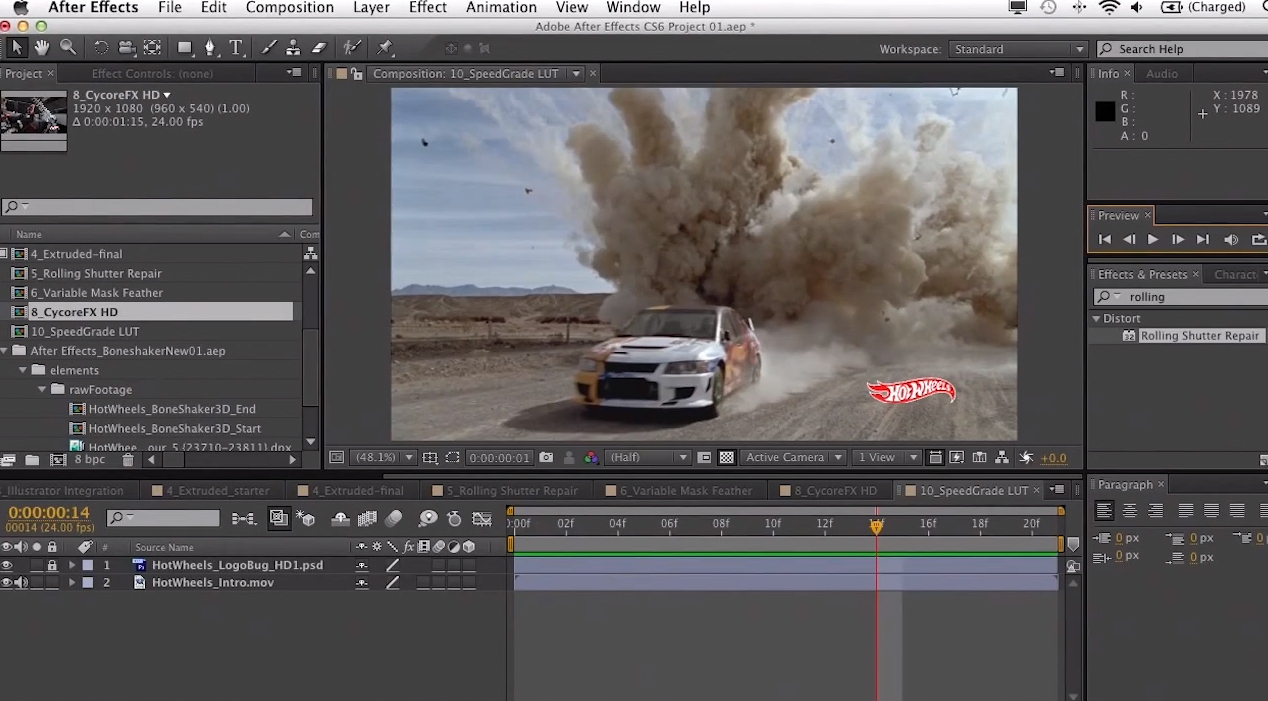
A compositing software is simply a software that can be used to bring multiple assets together to create a finished scene. For example, a single VFX shot may require that a green screen plate, a background, some explosion elements, dust, and smoke all be composited into a single scene. This would be incredibly difficult to do inside of a video editing application, so a specialty application like AfterEffects is the way to go.
Most video editors, however, use AfterEffects’ compositing capabilities for less-flashy projects. It’s not uncommon to use AfterEffects to do a quick screen replacement for a product demo or blur out a logo using the 3D camera tracker.
Just like in Photoshop, AfterEffects layers can take on certain blending modes that affect they way your layer is interpreted with the footage behind it. This is great for 3D models and designs, as you often perform multi-pass renders in which different elements will be composited together to create a final 3D image. In this case, you might have a shadow layer in which you want to only see the dark parts of the image and a highlights layer in which you only want to see the light parts.
A blending mode is perfect for putting all of these elements together. On a practical level, you could use blending modes for adding elements over your footage. One example you may recognize are light leaks. Using the ‘Add’ or ‘Screen’ blending mode, users can easily composite light leaks over their footage in AfterEffects to create stylized footage.
Scripts
Unlike plugins, scripts don’t unlock anything that AfterEffects isn’t already capable of doing — they simply automate a process that would normally take longer for someone to do. For example, there are some scripts like AE Sweets that create shape animations by simply clicking a button. Here’s a quick demo of an animated badge set that can be created with an AfterEffects script.
If you were a seasoned AdobeAfterEffects veteran, you would probably have no trouble creating shape animations — but having the ability to create them with just a few mouse clicks makes the whole design process much faster. A few seconds saved here or there may add up to hours saved over the course of a project.
There are tons of other scripts that can be used to perform a number of different tasks, from offsetting layers to rendering compositions. The biggest thing to remember when working on a repetitive task in AfterEffects: look around… you’ll very likely find a script that can save you time.
Plugins Take After Effects to the Next Level
In addition to all of the effects mentioned above, there are hundreds of other additional effects that can be installed to take the functionality of AfterEffects even further. These plugins are essentially miniature applications developed by third-party companies that can be installed and used inside of AfterEffects.
There are a lot of different plugins, but a few of the most popular plugins available for AfterEffects are Element 3D, Trapcode Particular, Plexus, and Optical Flares. The Element 3D plugin is possibly the most impressive third-party plugin because it allows users to import, texturize, color, light, and create 3D objects inside of AfterEffects. It doesn’t replace a 3D modeling application entirely — but if you only work with 3D objects occasionally, it’s a helpful tool for speeding up the 3D design process.
Learning Adobe After Effects
There’s no way around it — learning AdobeAfterEffects takes time. While there are lots of different ways to learn AfterEffects, the best thing to do is simply go through a fundamentals course. Once you learn the basics, just start searching topics you find interesting.
Think you might want to do motion graphic design? Well, do it! Want to create Star Wars effects from the comfort of your living room? You can do that too! If you’re still lost and don’t know where to take the first step, I recommend checking out our 5 Great Places to Learn the Basics of After Effects post, where you’ll find our favorite resources for learning AfterEffects from around the web. Here’s a fundamental AfterEffects lesson from our friends over at PremiumBeat.
Is There Anything After Effects CAN’T Do?
The question of what isn’t possible in AfterEffects is a very tricky one; while you may be able to make most things in AfterEffects, it isn’t necessarily the ideal tool to use for every motion graphic or VFX project. For just about every project, there’s an AfterEffects ‘hack’ you can use to simulate the desired effect. Below are two things you can’t do (or at least do well) in AdobeAfterEffects.
3D Modeling and Animation
Using Element 3D, you can import 3D objects into AfterEffects — but you’re limited when it comes to animating them, so you’ll never be able to replace a traditional 3D modeling/animation software. You’ll also be incredibly limited in the types of models you can create. If you’re serious about 3D design, you really need to begin learning a 3D software like Cinema 4D or Maya.
Video Editing (kinda)
As we’ve already stated in this post, AfterEffects isn’t a great software for audio or video editing. Sure… you might be able to get the job done if you absolutely had to, but it isn’t made for that. AdobeAfterEffects works best when paired with a video editing software. Premiere Pro pairs best with AfterEffects, but you could always use a software like Final Cut Pro or Media Composer to get the job done.
Again, if you have any questions about what you can do in AfterEffects, I’m more than happy to answer them in the comments below!
Sign In
Adobe After Effects Download
Register
- Access to orders in your account history
- Ability to add projects to a Favorites list
- Fast checkout with saved credit cards
- Personalized order invoices